

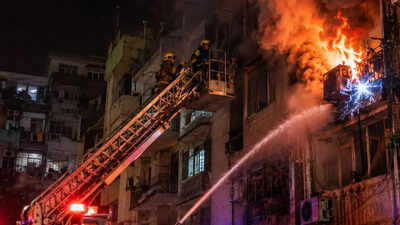
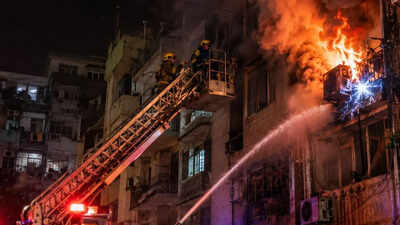
As temperatures across Delhi-NCR climb past 45 degrees Celsius, air-conditioners are now running almost constantly in homes, apartments and residential societies. In this extreme heat, another problem is quietly showing up inside these spaces: The risk of AC-related fires.What usually begins as a basic attempt to beat the summer heat can sometimes spiral into something far more dangerous. Old or faulty wiring, overloaded circuits, poorly serviced units and overheating compressors are increasingly being linked to residential fires that damage property and, in some cases, turn fatal.
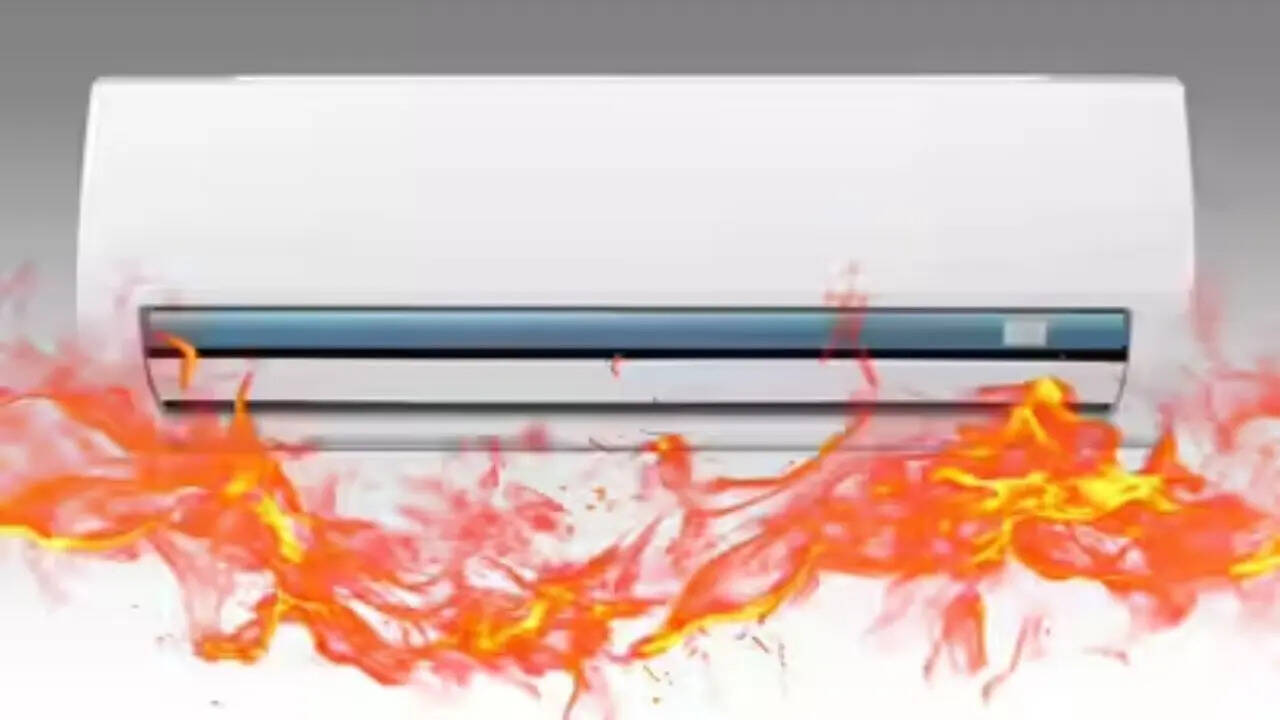
Recent incidents from Hauz Khas, Vivek Vihar and Ghaziabad have added to growing concern. They point to a pattern that is becoming harder to ignore—rising AC use is putting pressure on electrical systems that were never really designed for this kind of continuous load. Fire officials, power distribution companies and safety experts say maintenance gaps and lack of awareness are making the situation worse.There are usually warning signs before things go wrong. A faint burning smell, an AC that suddenly starts making unusual noises, lights flickering when the unit switches on, or a circuit breaker that keeps tripping—these are all early indicators of electrical stress. But in most homes, they are brushed aside until something actually fails.With heatwaves becoming longer and more intense each year, air-conditioners are no longer just about comfort. They have become a necessity. And that’s exactly why the bigger question now is not whether we use them—but whether our homes and electrical systems are truly equipped to handle them safely.
Recent AC fire incidents that raised alarm across Delhi-NCR
Hauz Khas: AC blast leads to fatal fire
A fire in South Delhi’s Hauz Khas Enclave has once again pushed attention toward a growing summer concern in the city—air-conditioner related fires. In this case, retired IAS officer and former Competition Commission of India (CCI) chairperson Dhanendra Kumar died after a fire triggered by an AC blast in his home.The incident happened late at night in a three-storey house where his son had been staying after returning from London. The AC unit in that room had reportedly been serviced just a few days earlier. Even so, early findings suggest that a wiring fault may have been involved. The fire moved through the house quickly, leaving almost no time for any response once it started spreading.
Vivek Vihar: Suspected AC blast turns deadly
In East Delhi’s Vivek Vihar, a fire that broke out in the early hours of the morning turned into one of the most devastating residential tragedies in recent memory, killing nine people, including children.Residents remember a sudden loud blast, followed almost immediately by smoke filling the building. Within minutes, the fire had moved through several floors. People inside barely had time to understand what was happening, let alone escape.Investigators later looked into whether the fire started from an AC blast along with a possible short circuit. What made the situation far worse was how quickly smoke trapped people inside narrow corridors and enclosed spaces. Iron grills on windows and limited exits meant many escape routes simply didn’t help.It is one of those incidents that keeps coming up in discussions among fire officials—not just because of how it started, but because of how quickly it got out of control.
Ghaziabad: AC explosion sparks high-rise fire
A similar incident in Ghaziabad’s Indirapuram shook residents of a high-rise society when a loud explosion was heard from a 15th-floor apartment. Moments later, smoke and flames were seen coming out of the flat after an AC unit reportedly exploded.The heatwave at the time meant most homes were running air-conditioners almost continuously. Inside the apartment, the fire spread quickly, but firefighters managed to stop it before it reached neighbouring flats.No one was injured, but the incident left a strong impression on residents. In high-rise buildings especially, where dozens of AC units run at the same time, even a small electrical fault can escalate quickly when the system is already under heavy stress.
When cool air turns dangerous
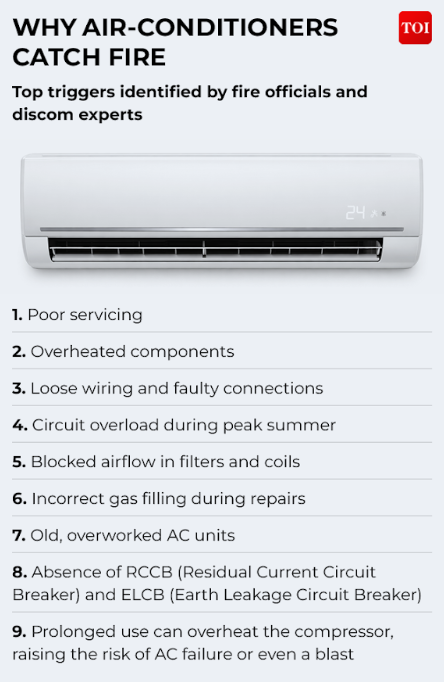
Air-conditioners don’t usually fail without warning, but the early signs are often too small to notice—or are simply ignored.One of the most common issues is poor servicing. When filters clog with dust and airflow gets blocked, the compressor has to work harder than normal. That extra pressure builds heat inside the system over time.Wiring problems are another major cause. A loose connection or worn-out cable can create sparks, and in a confined space like an outdoor unit, that’s enough to start a fire.Then there’s the reality of modern homes: too many appliances running at once. During peak summer, ACs, coolers, refrigerators and other high-load devices often share the same circuits in older houses that were never designed for this kind of demand.Add ageing machines, rushed repairs, and poor-quality replacement parts, and the risk doesn’t stay theoretical anymore—it builds quietly in the background.
The quiet symptoms before an AC breakdown
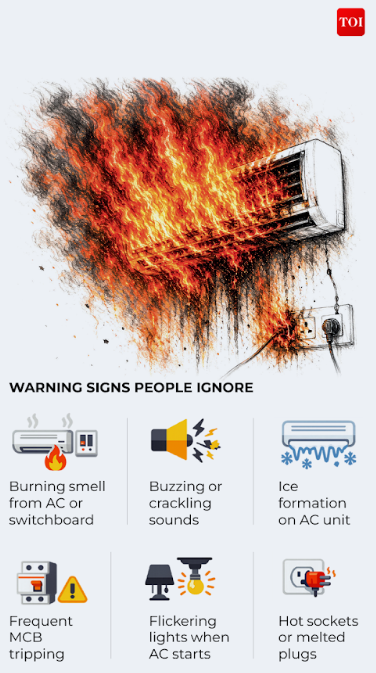
Most AC-related problems don’t start with anything dramatic. They begin with small changes that people tend to dismiss.A faint burning smell is one of the earliest warnings. So are sounds like buzzing or light crackling that weren’t there before.Sometimes the electricity itself gives it away—lights flicker when the AC switches on, or the circuit breaker trips repeatedly. In many homes, these are treated as “normal summer issues,” when they’re often signs of stress in the system.Hot or discoloured plugs are another red flag. So is ice forming on parts of the AC unit, which usually points to airflow or pressure problems inside the system.The problem is that none of these feel urgent in the moment. They only become serious when something finally fails.
Why aging components and improper repairs cause overheating
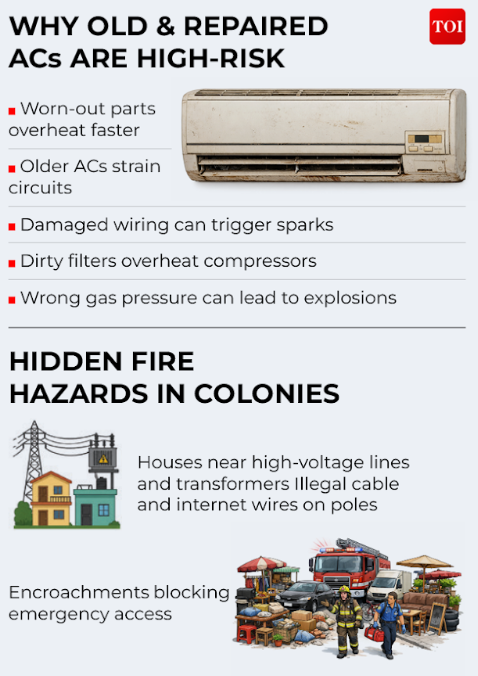
An AC doesn’t just “become old”—it slowly loses efficiency. Parts wear down, insulation weakens, and the system ends up working harder just to do the same job it once did easily.But age alone isn’t always the issue. Poor repair work is often more dangerous.In many cases, technicians replace parts that don’t match the system, refill gas incorrectly, or leave behind wiring that isn’t properly secured. The AC may run fine for weeks or months after that, which is exactly why the risk goes unnoticed.The trouble usually shows up when the load increases—especially during peak summer heat.
How heatwaves are worsening the risk
Delhi’s summers aren’t just hotter now—they stay intense for longer stretches. When temperatures remain above 40°C for days, AC usage stops being occasional and becomes continuous.That changes the entire equation.More usage means more load on circuits. More load means more heat inside wires and components. And once systems are running at their limit for hours every day, the margin for error becomes very small.At the same time, electricity demand across the city rises sharply, and voltage fluctuations become more common, especially during peak evening hours.It all adds up quietly in the background.
How residents can stay safe
Most experts don’t talk about complicated solutions—they talk about consistency.Servicing before peak summer makes a difference. So does avoiding extension boards for heavy appliances like ACs.Dedicated sockets reduce unnecessary load. So does simply not pushing systems beyond what they’re designed for.Keeping the temperature around 24°C also helps reduce strain on the machine, even though many people prefer lower settings during peak heat.And perhaps the most important point: repairs should always be done by trained technicians, not quick or informal fixes.
What to do if a fire breaks out
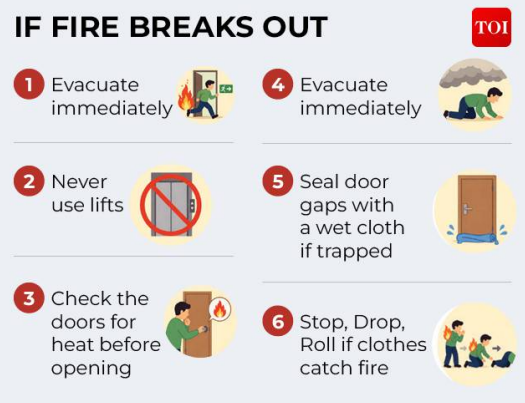
- If a fire starts, the first instinct has to be leaving the space immediately. Lifts should never be used.
- Before opening a door, it should be checked for heat. If smoke is present, staying close to the ground makes breathing easier.
- If escape is not possible, sealing gaps under doors with a wet cloth can help slow down smoke entering the room.
- A fire extinguisher can help in the early stage, but only if it is safe to use and the situation is still manageable.
A warning for a warming city
What’s happening in Delhi-NCR isn’t just about faulty appliances. It reflects a bigger shift—the way people live, the way summers are changing, and the way infrastructure is struggling to keep up.Air-conditioners are no longer optional in this heat. They are part of daily survival. But the systems supporting them—wiring, maintenance habits, and basic electrical safety—haven’t kept pace.The incidents being reported now aren’t isolated. They’re small warnings of a larger problem building slowly in the background.And in a city where every summer seems hotter than the last, that gap between comfort and safety is only getting harder to ignore.