

As one considers the deepest parts of our planet, it would seem likely that such depths should be distributed randomly around the Earth’s surface, with perhaps some deep abysses located along the African coast, others by the coasts of Europe, and others along the American coast. Yet this is not the case.In case you would like to study the top five deepest areas on Earth, then there is no point in consulting any world maps. It suffices to focus on just one ocean. Indeed, all of Earth’s deepest depressions can be found in the Pacific Ocean, thus transforming this enormous water body into an eerie neighbourhood of geological wounds. Such features are not some mere dents on the ocean floor. Rather, they are the product of the never-ending process of self-transformation that takes place within the Earth.The tectonic wonders of the Pacific regionIn order to understand why all the deep points belong to the Pacific Ocean, we should take a closer look at the processes occurring within the Earth. The external layer of the planet, which is known as the Earth’s crust, consists of large puzzle pieces, or tectonic plates. In the Pacific region, these plates are involved in a fierce battle for domination.When an oceanic plate rams into a lighter continental plate, it does not just crush against it. It dives steeply beneath it, plunging straight down into the hot mantle of the Earth. This process is known as subduction, and the exact point where the plate bends and dives is where an ocean trench is born.Because these intense collision zones ring the Pacific Basin, it has become the ultimate factory for deep-ocean abysses. According to a landmark overview by the Woods Hole Oceanographic Institution, these trenches represent the most powerful plate interactions on Earth. They are the surface expressions of a planet swallowing its own crust.The following is a comparison of the world’s five deepest trenches, based on the verified measurements of their depths.1. The Mariana TrenchLeading the pack is the Mariana Trench, which can be found in the western Pacific Ocean. This is the heavyweight champ when it comes to deep-sea trenches. At its deepest point, the Challenger Deep, the bottom reaches a whopping 11,034 meters. If we were to turn the majestic Mt. Everest on its head and plunge it into this trench, there would still be thousands of meters of water covering its summit.2. Tonga TrenchThe Tonga Trench, situated in the southwestern part of the Pacific Ocean, is considered the second deepest trench on earth, with a depth exceeding 10,800 meters. The characteristic of the Tonga Trench is its rate of descent, which is very fast. It is because of the high speed of collision between the tectonic plates here.
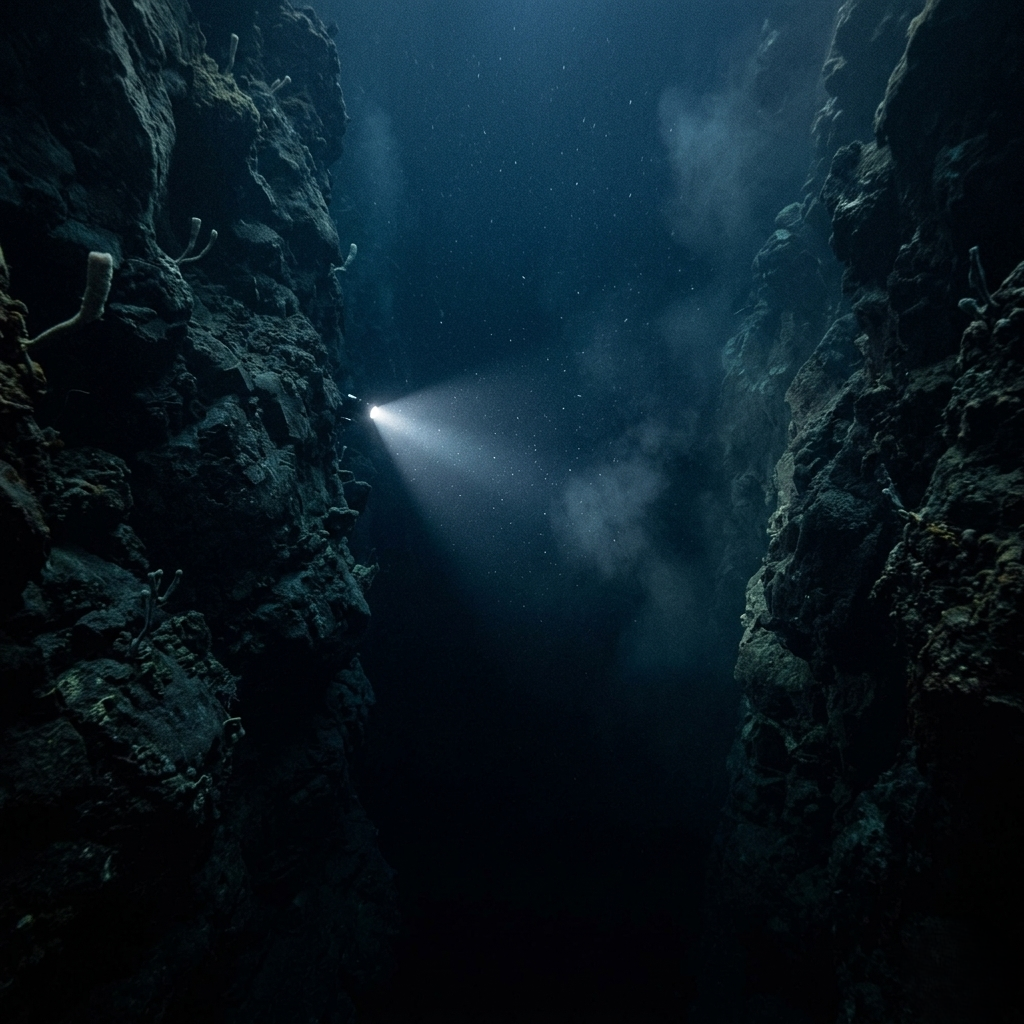
These trenches, like the Mariana and Tonga, are formed where oceanic plates dive beneath continental plates, creating geological wounds. Image Credits: Google Gemini
3. Philippine TrenchAt a staggering depth of more than 10,500 meters, the Philippine Trench is yet another deep trench found in the western Pacific Ocean, characterised by steep sides formed by a complicated system of intersecting tectonic plates. The geometry involved is extremely sharp, forming a deep cut in the ocean’s crust.4. Kuril-Kamchatka TrenchThis massive trench is among the list of trenches which have depths exceeding 10,500 meters, making it almost equal to the Philippine Trench. Located in the northwestern region of the Pacific Ocean, the trench stretches across the Kuril Islands and consists of continuous subduction zones.5. The Kermadec TrenchCompleting the list at number five is the Kermadec Trench, which plunges beyond 10,000 meters into the southwestern Pacific Ocean. Working together with the Tonga Trench system, Kermadec becomes the ultimate support point for this southern chain of extreme underwater geography, showing us that when it comes to the Pacific’s claim on underwater geology, there can be no disputing that claim.How these findings reshape our geographical thinking and what they mean scientificallyThis sweeping of the top five places reshapes our understanding of what geographies mean. Extreme underwater environments are not unique cases in the world.But then, charting the course of these alien landscapes is no easy task. From the extensive amount of research that has been conducted by the National Centers for Environmental Information at NOAA, it becomes clear that getting precise results under the extensive depths of water is no easy task. Sound waves are sent out from the bottom of the ocean via ships, but factors such as water pressure may cause misreadings.It should not be surprising, therefore, that modern oceanographers tend not to employ exact readings for such second-place trenches.What is known about these trenches, however, is that they are dynamic and not merely dead areas. These trenches carry within themselves the clues to how Earth maintains itself, how it recycles itself, and even how life might be sustained on other frozen moons. The answer lies in the depths, but until then, it seems that all the answers lie locked up safely in the depths of the Pacific Ocean.