


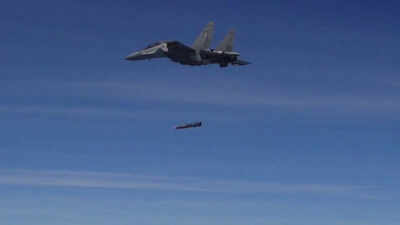
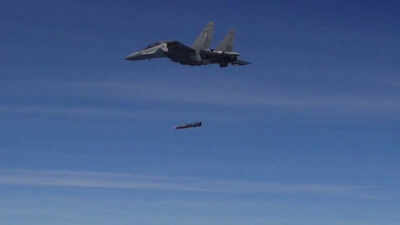
The Rudram series of missiles are anti-radiation missiles that are designed and developed in India as radar busters. These missiles are designed to home-in to enemy radar systems and destroying them. The destruction of these radars will then give friendly aircraft the ability to conduct operations without worrying about being detected by either early warning or fire control radars, thus making these missiles indispensable for modern aerial operations. India had used loitering munitions to home-in on Pakistani air defence radars on the final day of Op Sindoor. Even the US and Israel which operate stealth aircraft, destroyed Iranian air defence radars using anti-radiation missiles.
What is an anti-radiation missile
An anti-radiation missile is a type of missile that follows radio pulses or radiation back to its source in order to destroy it. These missiles either destroy radars or the crew of these radars stop emitting in case of an impending attack, thus rendering these systems ineffective. Modern anti-radiation missiles have built in internal navigation systems that can guide it to the last known location of the radar. Some modern anti-radiation missiles are also designed to destroy jammers, including GPS jammers in order to make airstrikes more effective.
RudraM-II, Air-to-Surface Missile was successfully tested by #DRDO and @IAF_MCC from Airborne Platform. The tests were conducted under extreme release conditions with critical trajectory establishing the capability of all subsystems. pic.twitter.com/ED6DZK4hz7— DRDO (@DRDO_India) June 2, 2026
India’s own anti-radiation missile
India is developing its own series of anti-radiation missiles of the Rudram family. There are four missiles in this family, which are designed to hit targets at different ranges. Rudram‑II was developed indigenously by the Research Centre Imarat. The Indian Air Force also uses the Russian-origin Kh-31 missile, which can be deployed by the Su-30MKI fighters.The Defence Research and Development Organisation and the Indian Air Force successfully conducted flight tests of the Rudram‑II air‑to‑surface missile from an airborne platform earlier this week from the Integrated Test Range at Chandipur.