

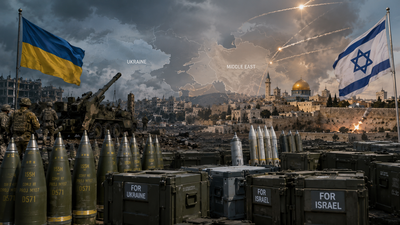
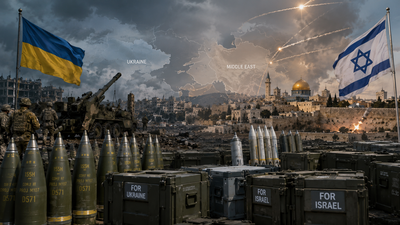
When Russian tanks rolled into Ukraine in February 2022, the West responded with a level of military urgency not seen since the Cold War. The United States and its Nato allies rushed artillery shells, anti-tank missiles, precision-guided systems and air-defence interceptors into Kyiv, believing overwhelming military support could blunt Russia’s invasion while preserving the broader balance of power in Europe.Western leaders assumed that, although stockpiles would come under temporary pressure, industrial production could catch up and defence factories would be expanded, with revived dormant assembly lines and reserves replenished over time. Four years later, that confidence looks increasingly fragile.The war in Ukraine has become a grinding industrial conflict that consumes ammunition and missile systems at a pace few Western planners anticipated.
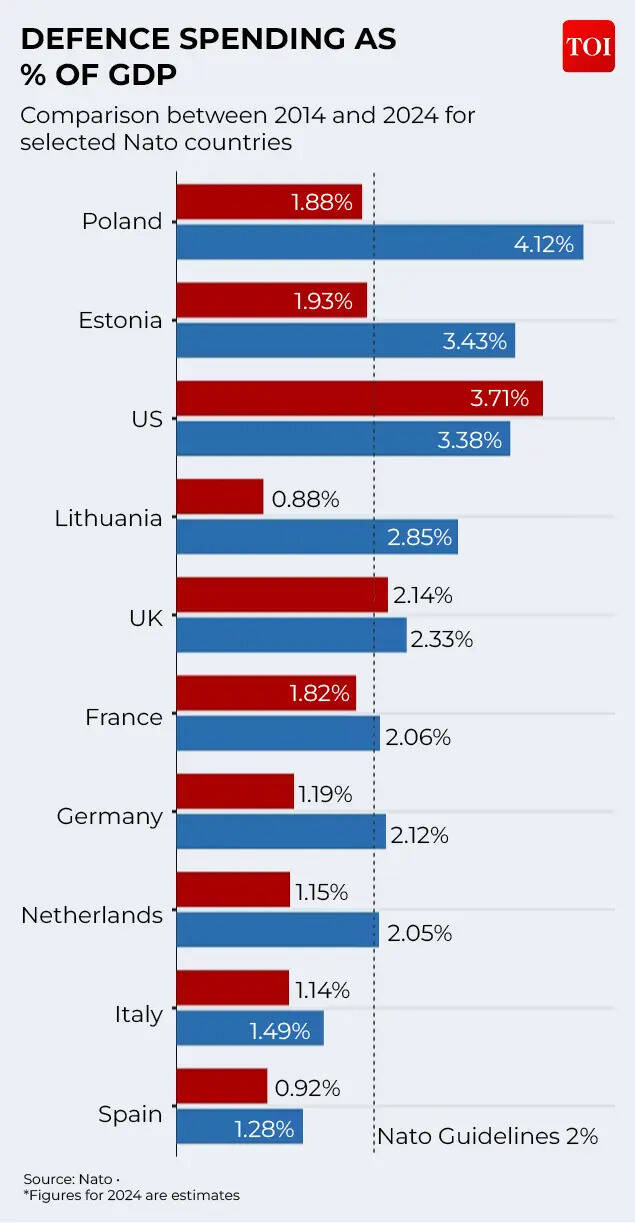
Defence spending as % of GDP
At the same time, the Middle East has erupted into another major theatre of instability after escalating attacks involving Hamas, Hezbollah and Iran-backed militias. Israel’s military needs have surged, especially for missile interception and air defence. Suddenly, two of Washington’s strategic partners are drawing from the same pool of weapons, the same production lines and the same strained supply chains.The dilemma confronting the West is no longer theoretical but political and deeply strategic. The question is when two wars require the same weapons at the same time, who gets priority?That question is now shaping defence planning across Washington, Brussels and Natheadquarters. The issue is not merely how many missiles or artillery rounds can be manufactured each month; it is also how the United States and its allies define urgency, deterrence and strategic commitment in a world where multiple conflicts may unfold simultaneously.
The Ukraine war
In the early months of the Ukraine war, Western governments discovered how unprepared they were for a prolonged high-intensity conflict. For decades after the Soviet collapse, many Nato members reduced ammunition stockpiles and downsized domestic arms production.
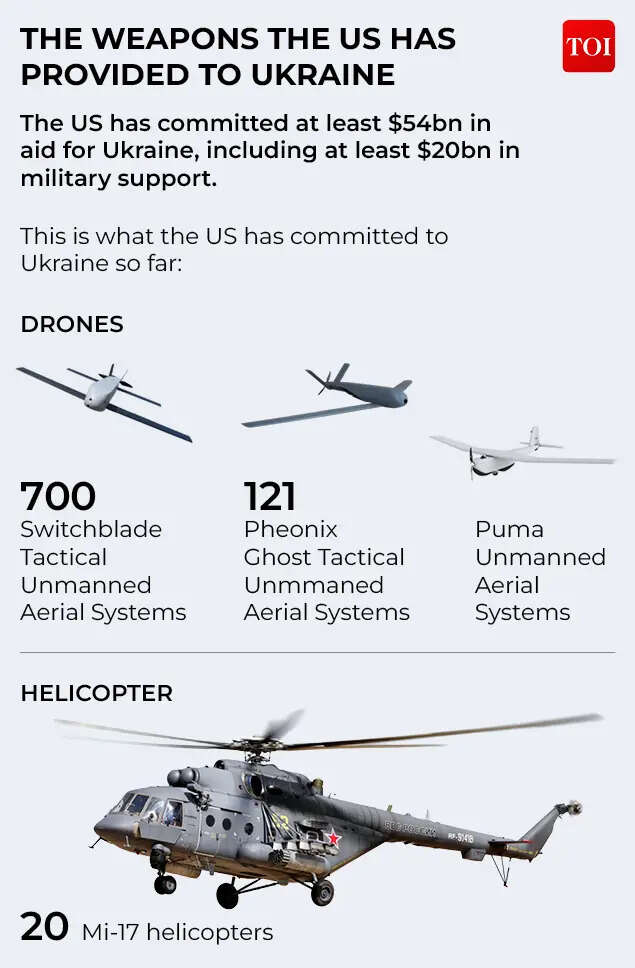
The weapons the US has provided to Ukraine
Defence priorities shifted toward advanced fighter aircraft, intelligence, cyber warfare and rapid-response systems designed for short operations rather than long attritional wars. Ukraine also exposed the consequences of those assumptions.
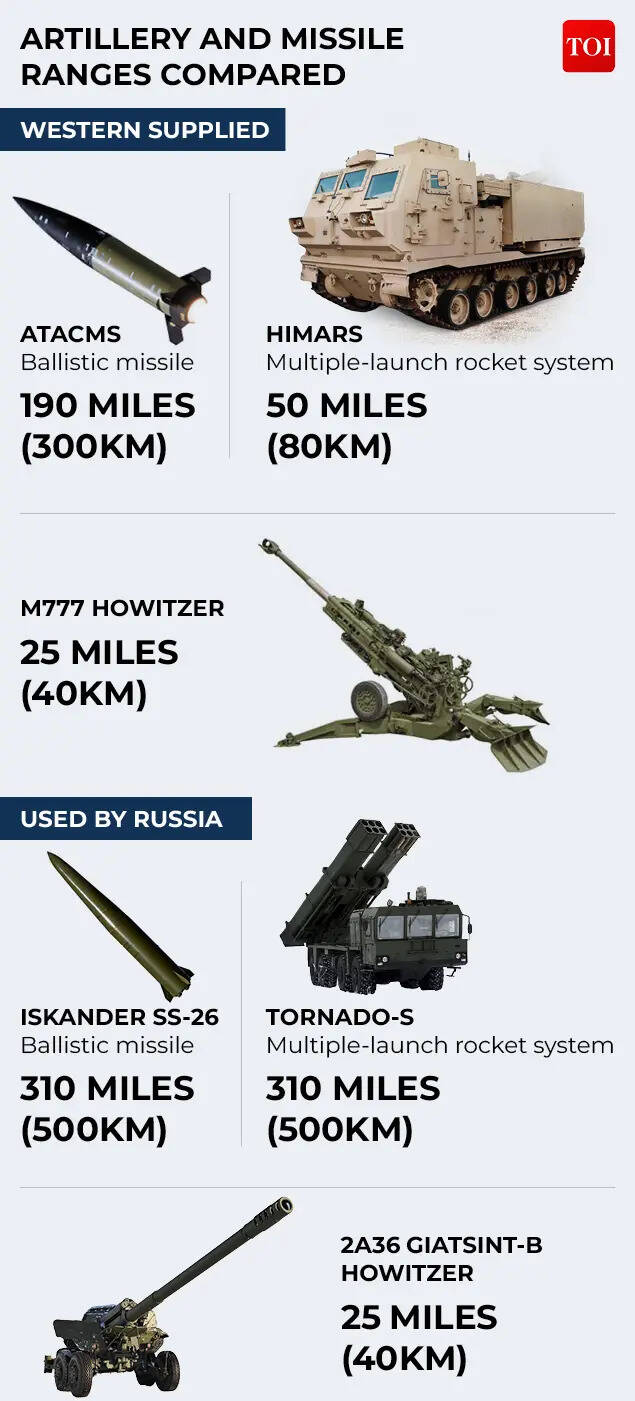
Artillery and missile ranges compared
Russian and Ukrainian forces burned through artillery ammunition at extraordinary rates. Air-defence systems required constant replenishment as missile attacks intensified. Precision-guided weapons that had been treated as scarce strategic assets became routine battlefield necessities. Western governments initially relied on reserves, believing industrial production would close the gap. Instead, the conflict continued month after month, steadily draining Nato inventories.
The Middle East crisis
Israel’s needs differ from Ukraine’s in some respects, but there is significant overlap in critical categories. Israel requires advanced interceptors linked to Iron Dome and Patriot batteries to defend against rockets, drones and ballistic threats. Ukraine continues to depend on similar missile-defence systems to counter Russian aerial bombardment and maintain battlefield resilience.
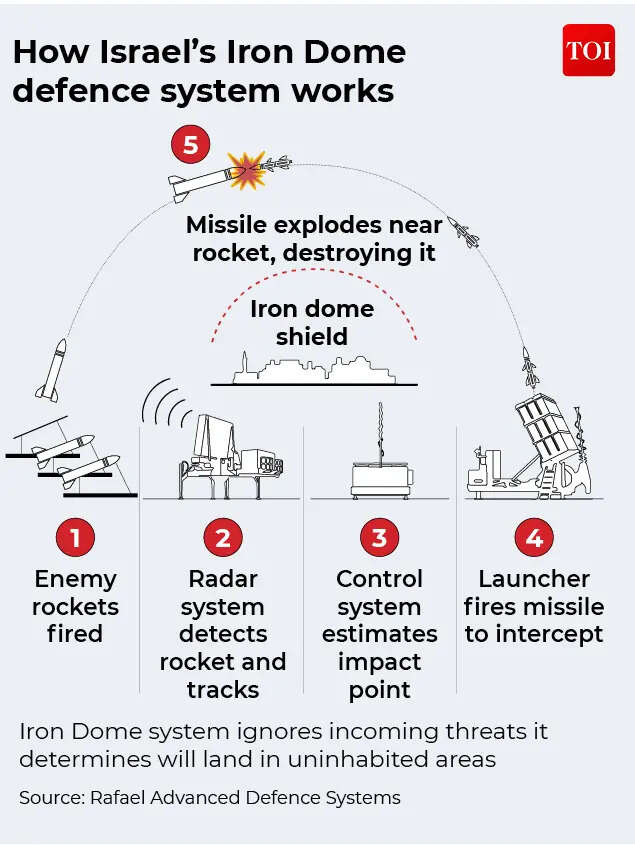
How Israel’s Iron Dome defence system works
These are not simple weapons that can be manufactured overnight. Modern missile systems rely on specialised components, advanced semiconductors, rocket motors and precision guidance. Production chains are complex, expensive and vulnerable to delays. Even the United States, the world’s largest defence producer, cannot instantly replace weapons consumed in two active theatres simultaneously.
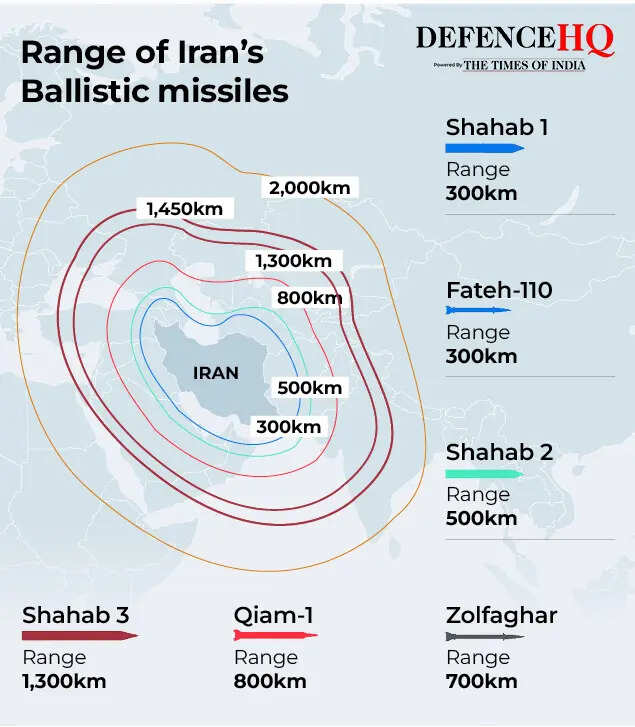
Range of Ballistic missiles
Defence analysts warn the issue is not just the quantity of weapons today but the speed at which industry can regenerate what has been used. A single week of heavy combat in either theatre can consume months of production output for certain precision munitions and interceptors.This has transformed a temporary logistical challenge into a broader strategic concern.For Washington, the political calculations surrounding Ukraine and Israel are not identical, even if both are vital partners. Ukraine is central to containing Russian expansionism and preserving European security. Since 2022, Nato leaders have framed support for Kyiv as essential to the alliance’s credibility. European capitals fear a weakened or abandoned Ukraine could embolden Moscow and destabilise the continent.
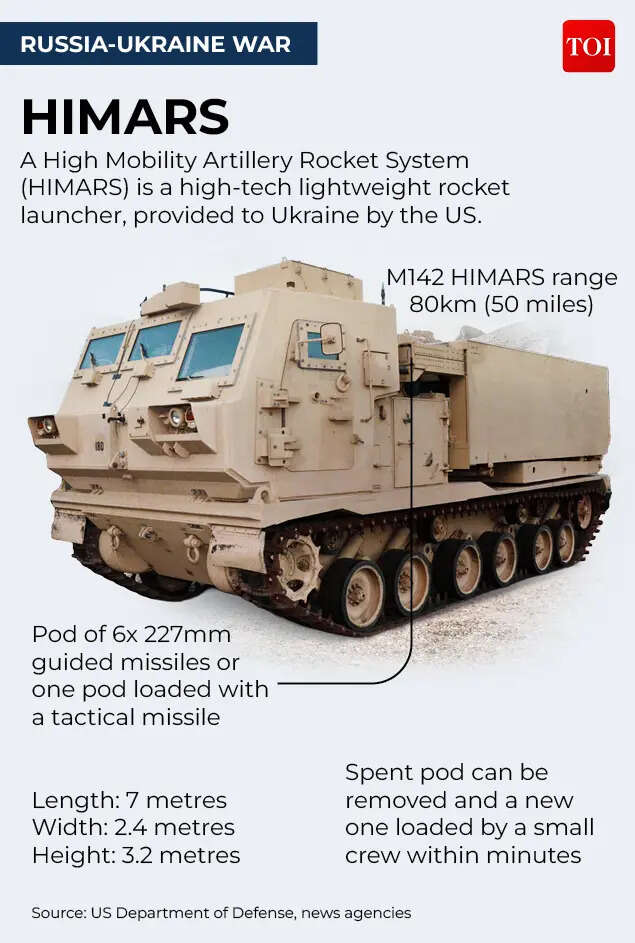
Himras
Israel occupies a different category in American strategic thinking. The Middle East conflict directly affects US military deployments, regional alliances and energy security. American personnel and bases across the region face direct threats when tensions escalate involving Iran-backed militias or Hezbollah. Protecting Israel is therefore linked not only to alliance commitments but to the immediate safety of US assets and personnel. That distinction shapes urgency inside the White House and Pentagon.When missile attacks intensify over Israeli cities or American facilities face danger, pressure builds for immediate replenishment of air-defence systems. Production schedules can shift quickly toward the most immediate crisis. Ukraine’s needs, while strategically significant, often compete against the political reality that threats involving US personnel tend to trigger faster responses.Officials in Kyiv are acutely aware of this dynamic and Ukrainian leaders have increasingly expressed concern that attention and military resources are being diverted toward the Middle East. Some defence analysts say certain weapons initially expected for Ukraine have already faced delays as production priorities shift to replenish Israeli and regional US requirements.Publicly, Western governments insist commitments to both Ukraine and Israel remain firm. Privately, defence planners acknowledge unavoidable trade-offs. The problem is not political will but the simple reality that industrial capacity cannot expand overnight. This has triggered debate about the future structure of Western defence production.
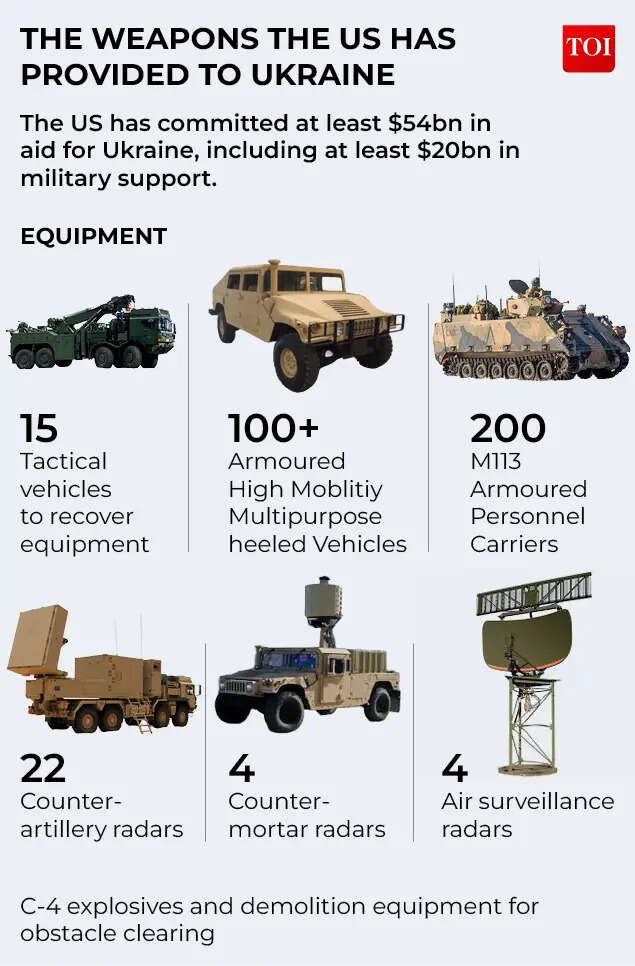
The weaons the US has provided to Ukraine
Since the Ukraine war escalated, the Pentagon and several European governments have launched emergency procurement initiatives to expand manufacturing. New contracts have been awarded, regulations streamlined and subsidies introduced to encourage long-term industrial investment. Nato members have discussed coordinated stockpile strategies and multinational ammunition reserves to reduce future shortages.
Structural limits remain
Building factories takes years. Expanding skilled labour cannot happen instantly. Critical components for missile guidance depend on fragile global supply chains vulnerable to geopolitical disruption. Western governments also worry that dramatically expanding open-market production could fuel cost inflation, profiteering and technology leakage.The result is that Nato confronts a reality it spent decades trying to avoid: the return of industrial warfare.For much of the post-Cold War era, Western doctrine assumed future conflicts would be short, technologically overwhelming and limited. Ukraine shattered that belief. The Middle East crisis reinforced the lesson. Modern warfare, despite technological advances, still depends on sustained industrial capacity and large-scale ammunition production. This carries consequences beyond the immediate battlefields.
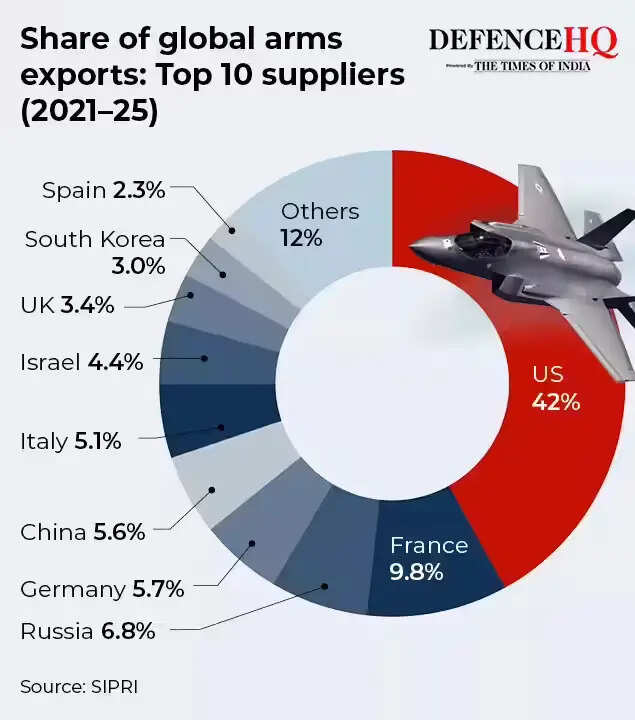
Share of global arms
Russia, Iran and China are closely watching how the United States and its allies manage simultaneous crises. If adversaries conclude Western arsenals are overstretched or Nato cannot sustain multiple commitments, they may be more willing to test alliance cohesion elsewhere. Strategic planners worry that parallel conflicts could become a deliberate method of exhausting Western military capacity.The concern is acute regarding China. Although US and allied officials say Chinese President Xi Jinping privately assured former US President Donald Trump that Beijing would avoid directly assisting Iran against the United States or Israel, Western governments remain cautious about relying on such assurances. Even without overt military intervention, Beijing retains economic and diplomatic tools that could complicate Western calculations.More importantly, that assurance does not solve Nato’s core problem: the West’s industrial base is struggling to support multiple high-intensity conflicts simultaneously. That reality has revived uncomfortable questions in Western capitals about prioritisation.Should immediate crises involving US forces automatically take precedence? Should long-term deterrence against Russia outweigh short-term pressures elsewhere? How much risk is acceptable in either theatre? These choices have consequences beyond the battlefield.If Ukraine perceives diminishing Western commitment, morale and battlefield confidence could weaken. If Israel faces delays during intense escalation, Washington risks appearing unreliable. At the same time, exhausting Western stockpiles too quickly could undermine Nato’s preparedness for future crises. This balancing act has turned defence logistics into geopolitical triage.
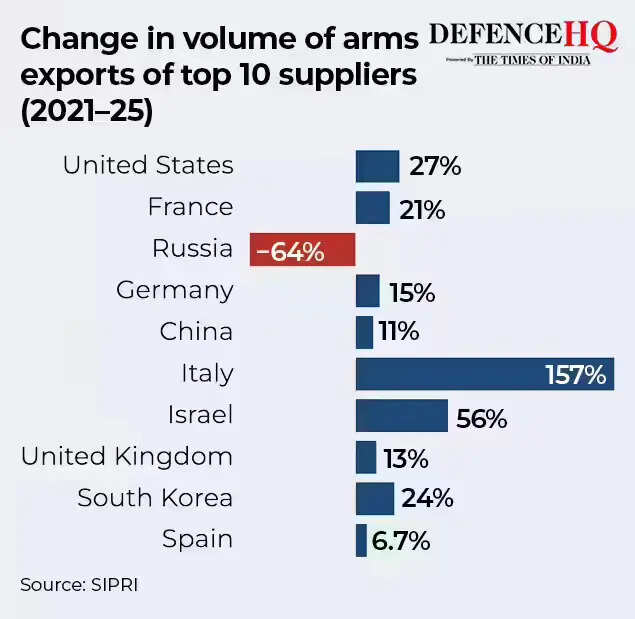
Change in volume of arms exports
During peaks in the Middle East, interceptors and missile-defence systems may move rapidly to Israel. When Russia intensifies offensives in Ukraine, artillery shells and precision systems may be redirected to Eastern Europe. Allocation decisions are increasingly shaped by immediate threat perception rather than stable long-term planning.The broader danger is that a reactive model may encourage adversaries to exploit moments of overstretch. If Russia or Iran conclude that opening parallel crises weakens Western focus and divides resources, the temptation for coordinated pressure could grow.That is why the debate is larger than Ukraine or Israel alone. It is about whether the West can rebuild the industrial depth necessary to sustain global strategic commitments in an era of renewed great-power competition.For decades, military superiority allowed the United States and its allies to assume technological advantages would compensate for limited industrial reserves. The wars in Ukraine and the Middle East force a painful reassessment. Precision weapons remain essential, but precision alone cannot replace manufacturing scale, resilient supply chains and large stockpiles.The challenge for Nato is not just shipping more missiles this month or replenishing inventories next year. It is redesigning an alliance built for one major crisis at a time and adapting it to a world where simultaneous wars may be increasingly common.Whether Western governments can make that transition will shape outcomes in Ukraine and the Middle East and the credibility of the alliance itself. For now, the United States and its allies are managing the problem through short-term prioritisation and long-term industrial expansion. Western capitals hope production capacity will catch up before another major crisis erupts.But the uncomfortable truth confronting policymakers is that the era of effectively unlimited Western military supply has ended. In a world where two wars compete for the same missiles, every shipment increasingly reflects a strategic choice about which conflict matters most at that moment.