

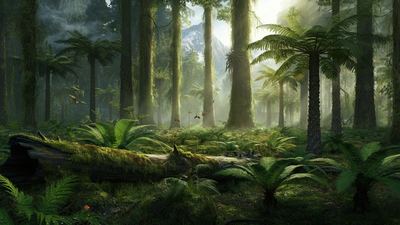
As reported in the journal Nature, the finding revealed that a temperate rainforest once existed near the South Pole during the Cretaceous period. Scientists explained that the fossils were not random pieces of plant fragments carried from elsewhere.Instead, the sediment core contained an intact network of “in situ” fossil roots preserved within mudstone, alongside pollen and spores, suggesting the vegetation had grown directly at the site where the core was recovered.Fossil roots are preserved in placeAccording to the Nature study, the scientists managed to discover a fossilised network of roots measuring three metres long in mudstone. The scientists found it along with a rich array of pollen and spores that dated back to the Cretaceous period, which was roughly 90 million years old. This discovery took place in the Amundsen Sea of the West Antarctic shelf.The roots were found to be “in situ”, meaning they were preserved in their original growth position. This was very important because it proved that the plants originated in those places rather than migrating there from elsewhere. In addition, the sediment layer contained other evidence of plant life, allowing scientists to piece together the ecosystem.According to the study, the rainforest existed during the Turonian to Santonian ages, around 92 million to 83 million years ago, at a palaeolatitude of nearly 82 degrees south.A very different AntarcticaToday, the Antarctic is the coldest and driest continent, featuring large ice masses and extreme periods of darkness. Nevertheless, the fossils show that the continent had a very different appearance during the Cretaceous period.Researchers concluded that West Antarctica once supported a temperate, swampy rainforest with conditions warm enough to sustain dense vegetation and stable soils. According to the British Antarctic Survey, the region may have experienced an annual mean temperature of around 12 degrees Celsius during that period.These findings also reveal that Antarctica was mostly ice-free then. According to the results of computer modeling performed by the researchers, the amount of carbon dioxide present in the atmosphere was considerably higher than that of today, helping create a greenhouse climate capable of supporting forests near the pole.Johann Klages and colleagues, who led the study, argued that the discovery demonstrates how sensitive polar areas are to high levels of carbon dioxide in warm periods on Earth.
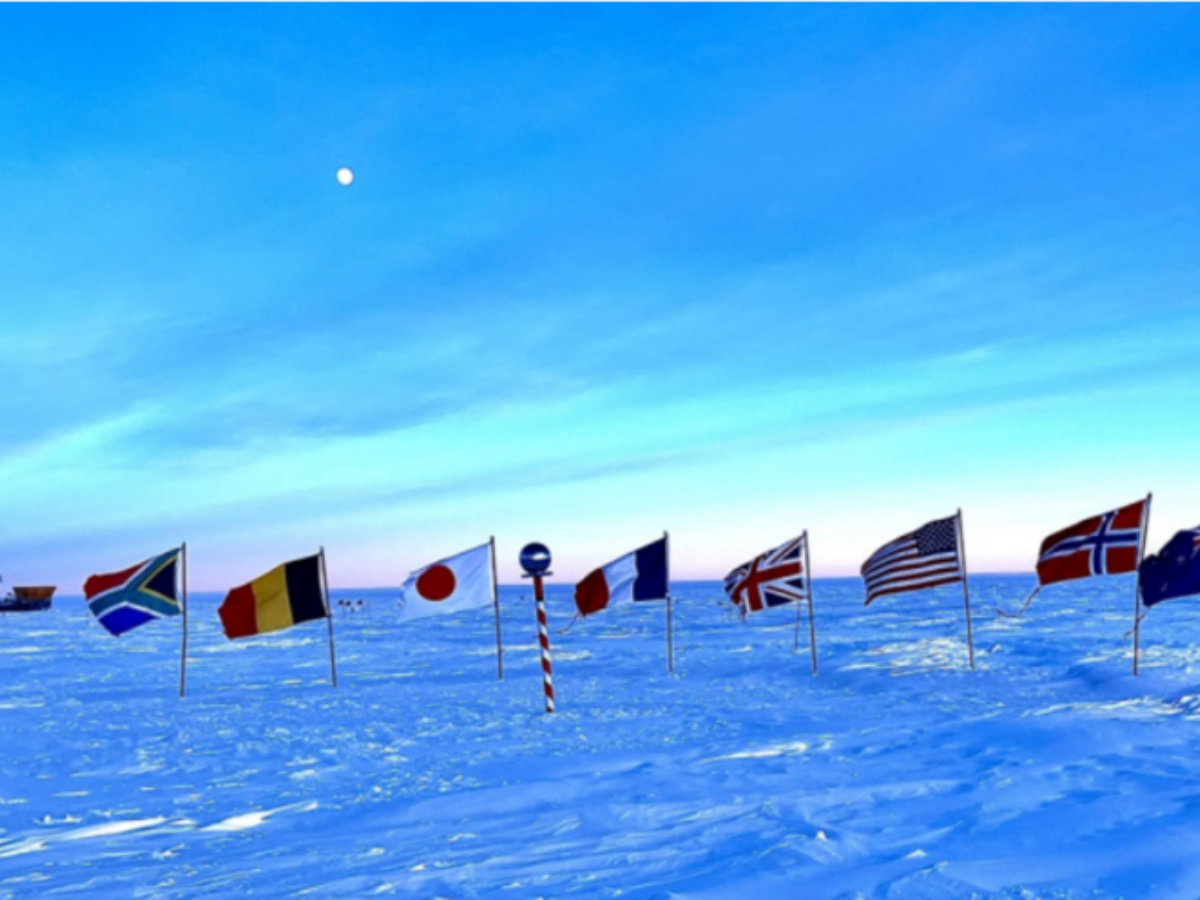
Image of South Pole| Image Credit: Wikimedia Commons
Why pollen and spores matterA lot of the information regarding the landscape was based on microscopic plant fossils found within the sediment layers. This kind of plant life is very valuable for researchers, as these plants have a high survival rate underground and give clues about ancient vegetation.According to the study, it became clear that the fossil community found in the core samples is associated not only with individual plant forms but also with an entire terrestrial landscape as well. The pollen and the fossil roots provided scientists with information about the existence of the rainforest at the southern polar coast of Antarctica.In other words, such a combination of evidence made the findings more reliable since the sediment preserved signs of plants as well as their actual structures.New Antarctic drilling continues to uncover climate historyThe rainforest discovery is also part of a larger scientific effort to understand Antarctica’s geological past through deep sediment drilling. In February 2026, a team of researchers working under the SWAIS2C project recovered a 228-meter-long sediment core from underneath the West Antarctic Ice Sheet at Crary Ice Rise. As reported, the core holds information on ancient rocks, mud, and even fossils, which could assist in uncovering the behavior of the ice sheet over millions of years of climate change.While the 2026 drilling mission is a completely different event from the discovery of the rainforest, the sediment record is vital because it holds clues to the environmental past of Antarctica buried under the ice.