

Almost everyone has had a moment when they knew a small change was no longer enough.A person keeps talking about leaving a miserable job but never actually resigns. Someone spends years saying they want to move abroad, start a business, lose weight, write a book, or end a relationship that clearly stopped working long ago. The plans stay alive in conversations, notes apps, and late-night thoughts. Real action never fully arrives.That is probably why this old quote from David Lloyd George still spreads across the internet more than a century later.It does not sound soft or comforting. There is no complicated philosophy hiding inside it either. The line works because the image feels instantly real. A giant gap cannot be crossed halfway. Tiny jumps might feel safer, but they still leave a person stuck in the same place.And honestly, modern life seems full of people standing at the edge of those kinds of “chasms.”
Quote of the day by David Lloyd George
“Don’t be afraid to take a big step if one is indicated. You can’t cross a chasm in two small jumps”
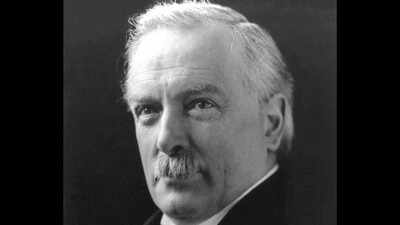
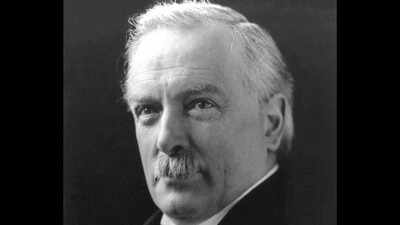
Who was David Lloyd George
David Lloyd George was one of Britain’s most famous political leaders and served as Prime Minister during the First World War. Born in 1863, he became known for his fiery speeches, quick wit, and willingness to take political risks that many others avoided.He was raised in Wales and came from a fairly modest background compared to many politicians of his era. That probably shaped some of his political views later. Lloyd George pushed welfare reforms, pensions, and labour protections at a time when Britain was changing rapidly because of industrialisation and social unrest.Historians still argue about parts of his legacy. Some viewed him as brilliant and fearless. Others thought he was too unpredictable or overly ambitious. Either way, he was rarely described as cautious.That personality shows up very clearly in this quote.
What is the meaning of the quote by David Lloyd George
The quote is really about moments where hesitation stops helping.Lloyd George compares difficult decisions to standing in front of a huge chasm. If the gap is small, careful little steps might work. A massive gap is different. Eventually, a person has to commit fully and leap across it.That idea applies to far more situations than politics.Someone may spend years trying to “slowly” leave a career they hate while becoming more exhausted every year. Another person may know their business is failing, but keeps making tiny adjustments instead of confronting reality directly. People do this emotionally, too. Difficult conversations get delayed. Big choices get postponed. Life stays stuck in limbo.The strange thing is that small jumps often feel productive at first. They create the feeling of movement without requiring real risk.But sometimes nothing actually changes.That seems to be the uncomfortable truth sitting underneath Lloyd George’s words.
Why the quote feels strangely modern
The quote is old, but it sounds like something written for the internet age.People today live in constant uncertainty. Careers change quickly. Entire industries appear and disappear within a decade. Someone can spend years studying for a profession only to realise the market has completely shifted.Social media probably adds another layer to it. Every day, people watch others announce major life decisions online. One person moves countries. Another quits corporate work to start a café. Somebody launches a YouTube channel after years of hesitation. There is endless visibility into other people taking risks.That creates a weird mix of inspiration and anxiety.Experts who study workplace trends often point out that younger generations now switch careers far more often than previous ones did. The idea of staying in one predictable role for forty years no longer feels realistic for many people.In that kind of world, Lloyd George’s quote suddenly feels very current again.
Why people delay big decisions for so long
Fear obviously plays a role.Still, it is not always fear of failure. Sometimes people fear embarrassment more than failure itself. Failing privately is one thing. Failing publicly in front of friends, relatives, or social media followers feels much worse.That probably explains why so many people remain stuck in situations they already know are not working.A familiar problem can feel safer than an uncertain future.Psychologists have talked for years about how human beings naturally prefer predictability, even when the predictable situation is making them unhappy. The brain likes routine because routine feels controllable. Big decisions break that sense of control completely.And large life changes rarely arrive looking neat or organised.People quitting jobs usually feel terrified beforehand. Entrepreneurs often admit they had no idea whether things would succeed. Even successful people, later describing their “big leap” moments, often confess they were panicking internally at the time.The confidence usually comes later. That part gets edited out of motivational stories.
How to apply this quote in daily life
The quote does not mean people should make reckless decisions overnight. Lloyd George was not saying every dramatic leap automatically leads somewhere good.The important phrase is “if one is indicated.”In other words, when the situation has already become obvious.A student preparing for competitive exams may eventually realise that inconsistent effort is not enough anymore. Somebody trying to improve their health may understand that temporary motivation will not solve long-term habits. A person trapped in an unhappy environment may recognise that endless waiting is quietly making things worse.The quote becomes useful in moments like that.It asks a difficult question: are small adjustments genuinely helping, or are they just delaying necessary action?That is probably why people keep sharing the line online. Most readers can immediately connect it to something personal in their own lives.
The internet loves this quote for a reason
Some quotes disappear after a few years because they sound dated or overly dramatic. This one survived because the metaphor is simple enough for almost anybody to understand immediately.A giant gap. Two tiny jumps.Failure becomes obvious before the sentence even ends.Social media also rewards quotes that feel visually strong. Lloyd George’s line almost creates a movie scene in the reader’s head. A person standing near the edge of something enormous, knowing that hesitation will not solve the problem.That image sticks.There is another reason the quote keeps circulating, too. Modern culture constantly encourages people to dream bigger while simultaneously making them terrified of mistakes. That contradiction creates paralysis. People want change, but also want guarantees before taking action.Life rarely gives those guarantees.
Why this quote will probably never disappear
Some sayings survive because they describe permanent parts of human behaviour.Fear of uncertainty is one of them.Every generation faces moments where the safe option slowly stops working. The details change with time. One era deals with industrial change, another with artificial intelligence, social media pressure, or unstable job markets. The emotional experience underneath remains surprisingly similar.People still hesitate before major decisions. They still wait for perfect timing. They still hope tiny adjustments will solve situations that probably require something much bigger.That is what makes Lloyd George’s quote feel timeless. It does not promise success or pretend that bravery is easy. It simply points out something most people already know deep down.Some gaps in life cannot be crossed halfway.