


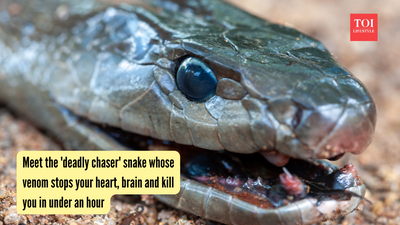
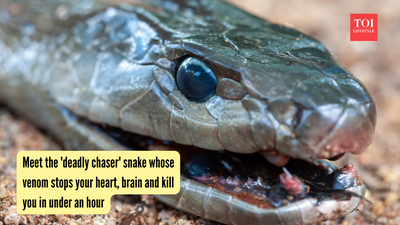
Ever since childhood, we have watched wildlife documentaries throughout the summer vacations and heard stories about the highly venomous black-mouthed snake, which has built a fearsome reputation for the slithering reptile, so much so that just hearing its name sends chills down a person’s spine.But, is it true that it is a human killer and chases humans down for prey?Let’s dig in to find out!

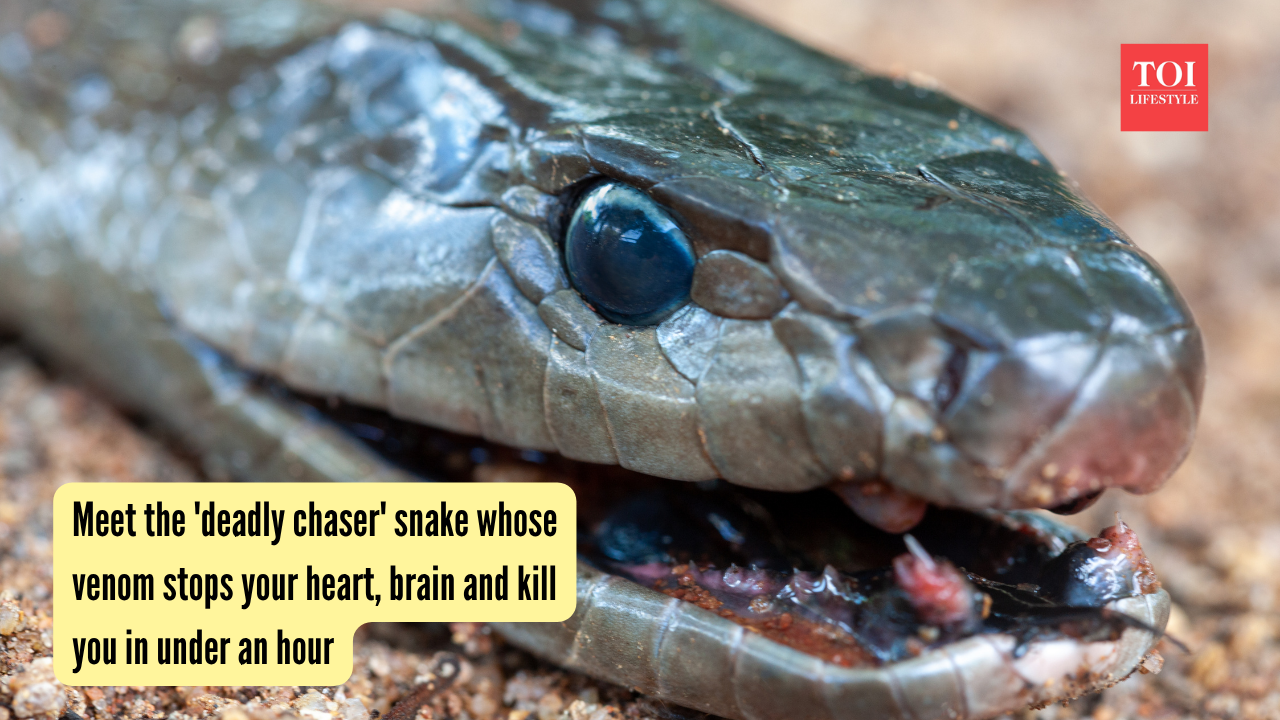
Black Mamba (Photo via Canva)
Meet the black-mouthed snakes, whose venom can kill within minutes!
The black mamba is one of Africa’s most feared snakes, with an image that often feels bigger than reality itself. Popular stories paint it as an aggressive killer that chases people and strikes without warning. But the truth about this interesting snake actually goes further than this!
So, where does the Black mamba’s fearsome image come from?
The black mamba is one of the most dangerous snakes in the reptile world, but much of its image is exaggerated. People call it extraordinarily aggressive and exceedingly fast, often describing it as “designed for danger”.But the truth is, it’s Africa’s longest venomous snake, growing over four meters, that can move quickly over short distances, which feeds the scary image.Even though it is called the Black Mamba, the snake isn’t actually black. It’s gray, olive, or brown. The name comes from the dark purple-black colour inside its mouth, visible when it opens wide during defense, and people combine its venomous nature with its appearance.
How quickly can a Black Mamba kill an organism?
Black mamba venom works very differently from other dangerous snakes. Many vipers destroy tissue and damage blood vessels, but black mambas target the nervous system instead. Their venom contains neurotoxins called dendrotoxins that disrupt potassium ion channels in nerve cells.This is a grave concern because the body performs its physiological tasks depending upon electrical signals for neurons to function. When those signals break down, the person loses control of important bodily movements like speaking, swallowing, blinking, and even breathing. A 2021 Clinical Toxicology review of documented Black Mamba envenomation cases found that neurological symptoms, including paralysis and respiratory impairment, enhance these effects.Symptoms typically start within the first hour after a bite, and the venom doesn’t rot flesh; it silences the signals that keep you alive.
Why does breathing stop, and death can happen in under an hour?
The reason black mamba bites can be fatal so quickly comes down to breathing. The diaphragm and breathing muscles need constant signals from the brain to work automatically, and when black mamba venom disrupts those neural signals, breathing gradually fails, even though your lungs and muscles are physically intact.
So, do Black Mambas actually chase human beings as prey?
Even though they are quite famous for being aggressive and quick, black mambas actually avoid humans whenever possible. Like most snakes, they don’t seek out confrontation because it’s biologically costly. Producing venom takes energy, and getting injured during a fight could mean death for the snake.Human beings do not fall into the prey category for Black Mambas, so they don’t ‘look’ for human beings to hunt them down. However, their image as quick hunters comes not from them actively seeking to kill human beings, but from their defensive attitude. When threatened, disturbed, provoked, or cornered, these slitherers tend to raise their hood, slip out their forked tongues, spread their neck, and flash their signature black mouth.The dangerous encounters we hear about usually happen when people accidentally trap or provoke the snake, not because the snake started the fight.