


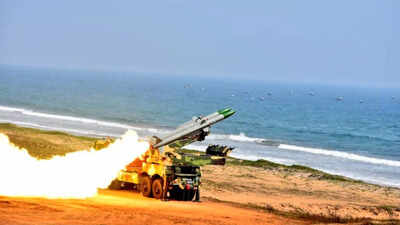
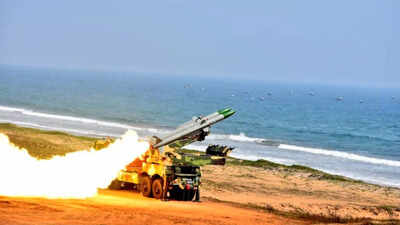
On the eve of his retirement, Chief of Defence Staff General Anil Chauhan unveiled the Joint Air Defence Doctrine, a step towards integrating the Army, Navy and Air Force into a seamless, multi-layered shield against aerial threats. The doctrine, released by Headquarters Integrated Defence Staff (IDS), is designed to strengthen operational preparedness and ensure synergy across the services in an era of drones, hypersonic weapons and saturation missile attacks.This is the 13th doctrine released by the Headquarters Integrated Defence Staff (IDS) and the seventh released by the apex tri-services body. Of these 13 doctrines, seven have been released in less than a year. The other documents that have been released include the joint doctrines for cyberspace operations, amphibious operations, airborne and heliborne operations, special forces operations, and multi-domain operations, as well as the joint primer for integrated logistics.The release of the document comes just a year after the remarkable demonstration of Indian air defences during Operation Sindoor. The operation showcased the ability of the Indian armed forces to impose costs on Pakistan while denying reciprocity to Rawalpindi. Frontline posts as well as air bases deep inside Indian territory operated under a protective umbrella of layered air defences, neutralising hostile UAVs and missile salvos. The operation validated India’s capacity to synchronise sensors, shooters and decision-making within compressed timelines, a precursor to the “kill-web” architecture now institutionalised in doctrine.Prime Minister Narendra Modi emphasised the importance of an air defence system. The PM announced that India is working to develop and deploy its own air defence umbrella, called ‘Sudarshan Chakra’.The importance of a robust air defence system has been underscored in recent months as air defence networks in West Asia faltered under repeated Iranian missile and drone barrages, exposing vulnerabilities in existing systems. India’s move to codify jointness in air defence is thus both a lesson learned and a hedge against similar saturation attacks.On the technological front, India has been steadily building and testing new systems. The most recent milestone was the successful trial of the Very Short Range Air Defence (VSHORAD) missile, designed to provide frontline troops with agile protection against low-flying aircraft and drones. Together with Akash, MR-SAM and upcoming long-range interceptors, it will form key layers of India’s multi-layered air defence shield.On the eve of his retirement, Chief of Defence Staff General Anil Chauhan unveiled the Joint Air Defence Doctrine, a step towards integrating the Army, Navy and Air Force into a seamless, multi-layered shield against aerial threats. The doctrine, released by Headquarters Integrated Defence Staff (IDS), is designed to strengthen operational preparedness and ensure synergy across the services in an era of drones, hypersonic weapons and saturation missile attacks.This is the 13th doctrine released by the Headquarters Integrated Defence Staff (IDS) and the seventh released by the apex tri-services body. Of these 13 doctrines, seven have been released in less than a year. The other documents that have been released include the joint doctrines for cyberspace operations, amphibious operations, airborne and heliborne operations, special forces operations, and multi-domain operations, as well as the Joint Primer for Integrated Logistics.The release of the document comes just a year after the remarkable demonstration of Indian air defences during Operation Sindoor. The operation showcased the ability of the Indian armed forces to impose costs on Pakistan while denying reciprocity to Rawalpindi. Frontline posts as well as air bases deep inside Indian territory operated under a protective umbrella of layered air defences, neutralising hostile UAVs and missile salvos. The operation validated India’s capacity to synchronise sensors, shooters and decision-making within compressed timelines, a precursor to the “kill-web” architecture now institutionalised in doctrine.Prime Minister Narendra Modi emphasised the importance of an air defence system. The PM announced that India is working to develop and deploy its own air defence umbrella, called ‘Sudarshan Chakra’.The importance of a robust air defence system has been underscored in recent months as air defence networks in West Asia faltered under repeated Iranian missile and drone barrages, exposing vulnerabilities in existing systems. India’s move to codify jointness in air defence is thus both a lesson learned and a hedge against similar saturation attacks.On the technological front, India has been steadily building and testing new systems. The most recent milestone was the successful trial of the Very Short Range Air Defence (VSHORAD) missile, designed to provide frontline troops with agile protection against low-flying aircraft and drones. Together with Akash, MR-SAM and upcoming long-range interceptors, it will form key layers of India’s multi-layered air defence shield.