


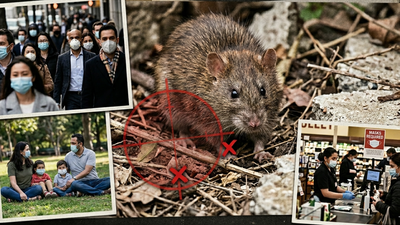
Ever since Covid-19 altered the rhythm of everyday life across the world, public reactions to disease outbreaks have fundamentally changed. A single unfamiliar virus name is now enough to trigger concern, speculation, and comparisons with the darkest months of the pandemic era. Coronavirus made following epidemiology a necessity.That is precisely why the renewed attention around hantavirus has generated anxiety far beyond the number of actual cases being reported. For many, the fear is immediate and instinctive.Could this become another Covid-like pandemic?While Covid-19 and hantavirus look similar on the surface, at core, the two diseases are fundamentally different in how they spread, how they behave, and how likely they are to pose a large-scale public threat.“The moment a virus starts appearing in headlines, especially one associated with breathing difficulty or fatalities, people immediately begin comparing it to COVID-19,” says Dr Amit Prakash Singh, Consultant in Internal Medicine at CK Birla Hospital, Delhi.According to him, this reaction is not irrational. Rather, it reflects the collective trauma left behind by the pandemic years.“After COVID-19, people have become far more alert to any infectious disease. Even isolated reports can trigger concern because the memory of the pandemic is still fresh in people’s minds,” he explains.
The psychology of post-pandemic fear
The world before Covid-19 approached diseases like Ebola, Nipah, Zika, or SARS as a geographically distant concern. But the 2020 pandemic changed that equation permanently.It made billions of people experience the direct social consequences forcing entire cities shut down. Schools closed. Airports emptied. Hospitals overflowed. Families lost loved ones without being able to say goodbye in person.

Dr Namita Jaggi, the chairperson of lab services and infection control at Artemis Hospital, says the heightened reaction around hantavirus reflects this lingering collective anxiety.“Every time a new infection enters public discussion, people naturally relate it to their recent experiences with COVID-19. The fear of another pandemic has created a tendency to compare every virus outbreak with what the world went through in 2020,” she says.The role of social media has further amplified this environment of fear.During the Covid pandemic, information moved faster but so did misinformation. So today, as soon as hantavirus began appearing in headlines, dramatic posts, misleading comparisons, and panic-driven narratives began circulating online.“Social media often amplifies fear before the scientific facts are properly understood,” says Dr Singh. “People see alarming terms like ‘deadly virus’ or ‘lung infection’ and immediately assume the worst.”But this rapid circulation of information often strips away critical context. A virus with a high fatality rate may sound terrifying in isolation, but without understanding how it spreads, the actual risk can be misinterpreted.
The most important difference: Transmission
At the centre of the concern lies one critical scientific question: How easily can the virus spread?According to experts, this single factor largely determines whether a disease remains a contained public health issue or evolves into a global crisis.Covid-19 became a pandemic because it spread exceptionally well between humans. The coronavirus was airborne. It could travel through respiratory droplets and aerosols expelled when infected individuals coughed, sneezed, spoke, or even breathed.

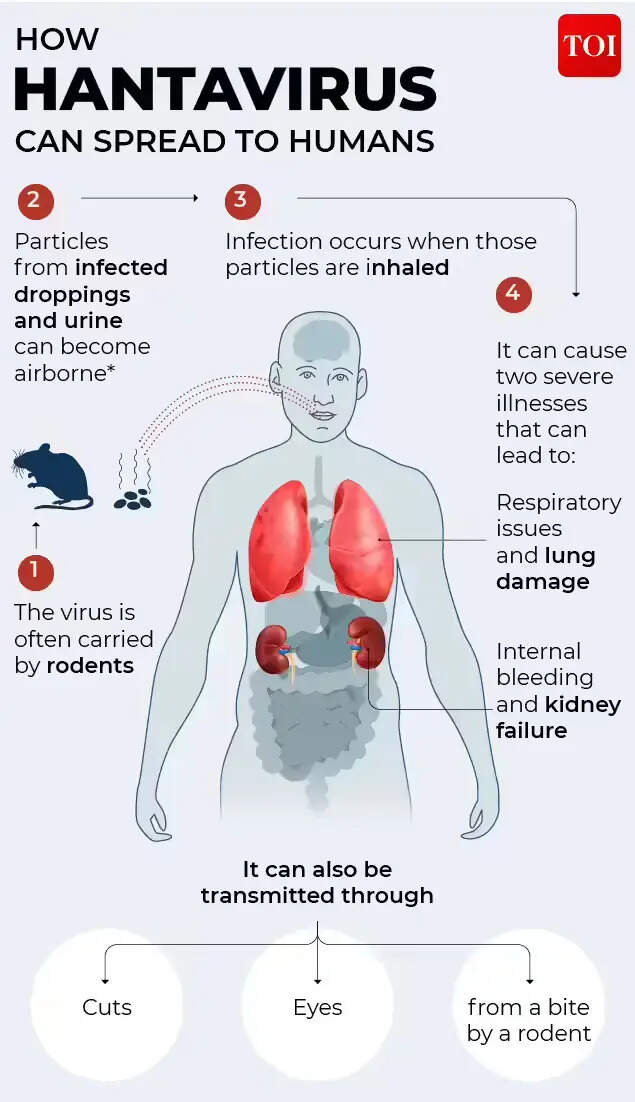
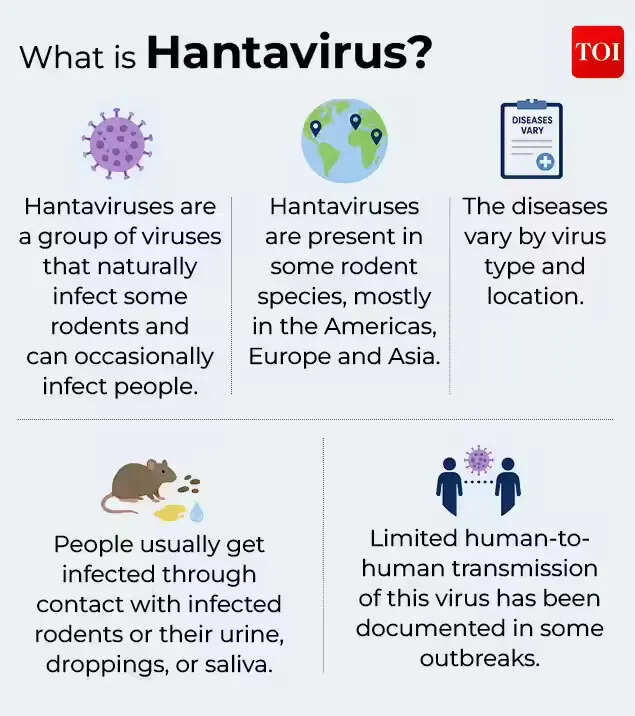
“Hantavirus behaves very differently,” explains Dr Singh. “Humans usually become infected through exposure to rodent urine, saliva, or droppings. It is not a virus that spreads efficiently through casual human interaction.”Dr Jaggi reiterates the same point. “Hantavirus is linked mainly to contact with infected rodents or contaminated environments,” she says.Fundamentally, spread of hantavirus remains on a limited scale.According to the World Health Organisation’s advisory, environmental exposure is the core factor. Particularly, areas where infected rodents are present remains culprit while basic hygiene could help avoid the risks of hantavirus.Experts say this makes widespread outbreaks far less likely.
Is hantavirus new?
“It has been known to medical science for decades,” says Dr Singh.One of the most widely recognised hantavirus outbreaks occurred in 1993 in the United States, particularly in the Four Corners region where Arizona, New Mexico, Colorado, and Utah meet. The outbreak drew attention after several previously healthy young adults developed sudden respiratory failure.Scientists later linked the cases to deer mice carrying the virus.Since then, hantavirus has continued to be monitored globally, with sporadic cases reported in different countries. Notably, it never generated the same sustained global attention as Covid because it lacked the ability to spread rapidly between people.Dr Jaggi says the renewed focus today reflects heightened global sensitivity rather than the emergence of a completely new threat.“This is not an unknown virus appearing out of nowhere. It has been studied for years. The difference now is that people are paying much closer attention to infectious diseases after COVID-19,” she explains.
The overlap in symptoms
Part of the reason hantavirus sparks concern is because its early symptoms can resemble those of Covid-19 and other viral infections.Patients may initially experience fever, fatigue, headaches, muscle aches, nausea, vomiting, and general weakness.

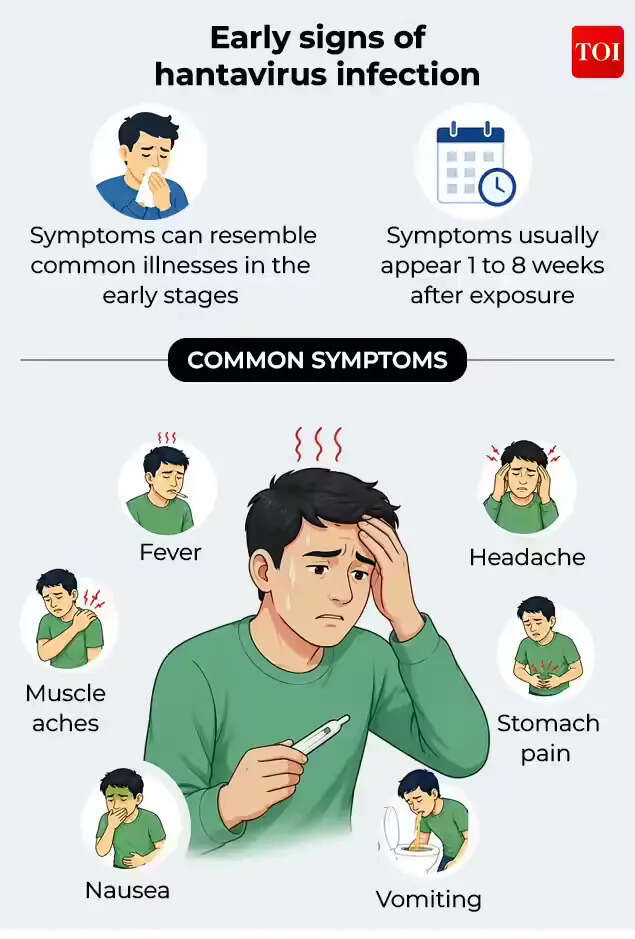
“In the beginning, it may not appear very serious,” says Dr Singh.This overlap creates confusion because many viral illnesses begin with similar symptoms. But as hantavirus progresses, particularly in severe cases, the illness can take a much more dangerous turn.In Hantavirus Pulmonary Syndrome (HPS), patients may suddenly develop severe breathing difficulty due to rapid fluid accumulation in the lungs.“The deterioration can happen very quickly, sometimes within 24 to 48 hours,” says Dr Singh.Doctors describe this rapid progression as one of the most alarming aspects of it. Dr Jaggi says patients can develop serious respiratory complications alongside low blood pressure and lung fluid buildup.Unlike Covid-19, where symptoms could vary widely from mild to severe, hantavirus tends to become dangerous rapidly once severe respiratory involvement begins.However, experts caution against interpreting this severity as evidence that the virus poses a greater global threat than Covid.
Why a deadly virus does not automatically become a pandemic
One of the biggest misconceptions in public discussions around outbreaks is the assumption that a high fatality rate automatically makes a virus more dangerous globally.Experts say this is not necessarily true.“A virus becomes a pandemic mainly when it spreads efficiently from person to person,” explains Dr Singh.Hantavirus can even be fatal in some cases. Certain forms of the disease have recorded significant mortality rates. But because transmission opportunities are limited, the virus lacks the conditions necessary for explosive global spread.

Covid-19 succeeded because of its asymptomatic nature. A person could have carried the virus without them or anyone else around realising. That silent transmission chain allowed it to move across cities, countries, and continents before healthcare systems could fully respond.Hantavirus lacks that stealth advantage.“With hantavirus, transmission is usually linked to environmental exposure, not casual contact with infected people,” says Dr Singh.Dr Jaggi says asymptomatic hantavirus infections are very uncommon, which significantly reduces opportunities for undetected spread.This difference alone dramatically lowers the possibility of a Covid-like scenario.
The role of rodents and environmental exposure
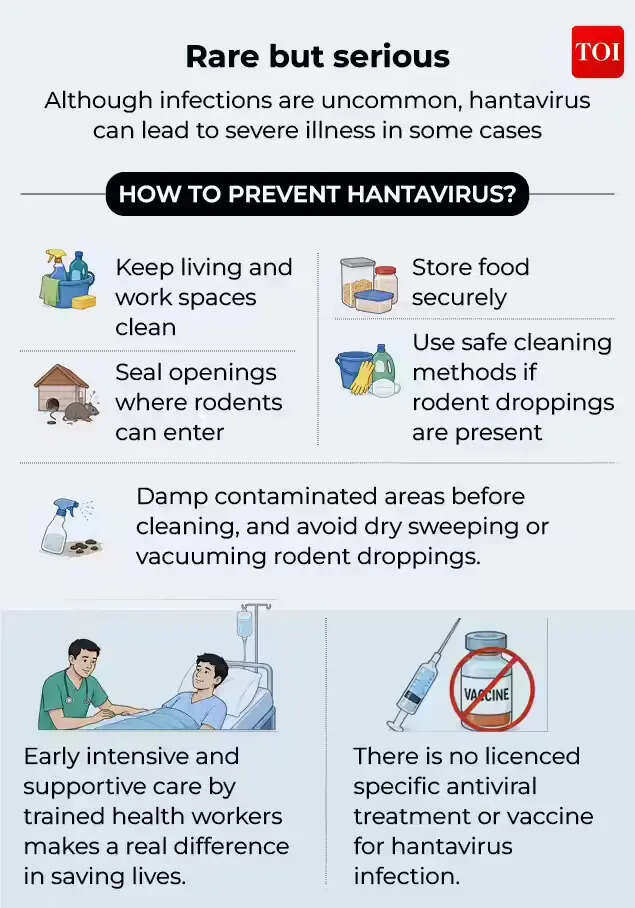
Unlike Covid-19, which relied on human mobility to spread, hantavirus remains closely tied to rodent populations.People typically become infected after inhaling virus particles from contaminated rodent excreta. Even cleaning enclosed spaces with rodent infestations can sometimes increase exposure risk. Because while the infected person may not spread it, the viral particles may become airborne.The population at a higher risk of this virus constitutes farmers, rural workers, campers, warehouse employees, or individuals entering poorly ventilated rodent-infested structures due to their occupational or environmental settings.“For people living in normal city environments, the risk remains extremely low,” says Dr Singh.Dr Jaggi similarly notes that ordinary urban activities do not generally create significant exposure risk.
What treatment looks like
Unlike Covid-19, where vaccines and antiviral treatments were eventually developed, hantavirus treatment remains primarily supportive.“There is no specific universally approved antiviral cure for hantavirus infection,” says Dr Singh.Doctors instead focus on managing complications and stabilising patients, particularly those who develop severe respiratory symptoms. Patients with advanced illness may require oxygen support, ventilators, intensive care monitoring, and careful fluid management.Dr Jaggi says early diagnosis plays an important role in improving outcomes because severe respiratory decline can occur rapidly.Thus, the medical experts stress the importance of recognising symptoms early.How to reduce riskPublic health guidance suggests maintaining clean storage spaces, sealing rodent entry points, safely disposing of waste, and ensuring proper ventilation in enclosed areas that may contain rodent activity.Shall the need be, cleaning rodent-infested areas with appropriate precautions become important. The core idea is to not disturb the contaminated dust that may release viral particles into the air.However, doctors repeatedly emphasise that the average person does not need to panic.“Hantavirus is not a broad public threat like COVID-19,” says Dr Jaggi. “The risk exists in specific situations and environments.”
Why the fear still feels real
Modern medicine had gained the trust to be able to manage catastrophic outbreaks. Covid shattered that assumption.Now, every new virus headline triggers the trauma. This has led to people taking the early warnings seriously. However, scientific reality remains different from emotional recall.Yes, hantavirus is real, yet medically, the two viruses operate under entirely different conditions.Hantavirus, while serious, does not currently display rapid or asymptomatic transmission.
Is it the new pandemic?
Medical experts are clear that hantavirus should be taken seriously, but not sensationalised.It is a dangerous illness that can become severe quickly, particularly in cases involving respiratory complications. But it lacks the primary ingredient that transformed Covid-19 into a global pandemic: efficient human-to-human transmission.For most people, especially those in urban settings without significant rodent exposure, the risk remains very low.Covid-19 left humanity more vigilant, more cautious, and in many ways more fearful of infectious disease threats. That vigilance can be valuable when grounded in science. But panic driven by comparison rather than evidence can create unnecessary alarm.