


For millions of years, dinosaurs ruled the Earth with their enormous size and top dominance across ancient ecosystems. They have a fearsome image in our minds as top predators, scaring every tiny being off.But it is surprising to know that even the largest prehistoric animals were not completely safe. During the Late Cretaceous period, young dinosaurs and eggs were especially vulnerable, attracting a range of carnivorous creatures looking for easy meals.In the past decade, several fossil discoveries have helped scientists understand these predator-prey relationships, revealing how ancient ecosystems functioned long before humans existed.Among the most interesting of discoveries is a prehistoric snake species found in India that may have preyed on baby dinosaurs!While this might seem unheard of, a study published in the Public Library of Science shed light on the same.

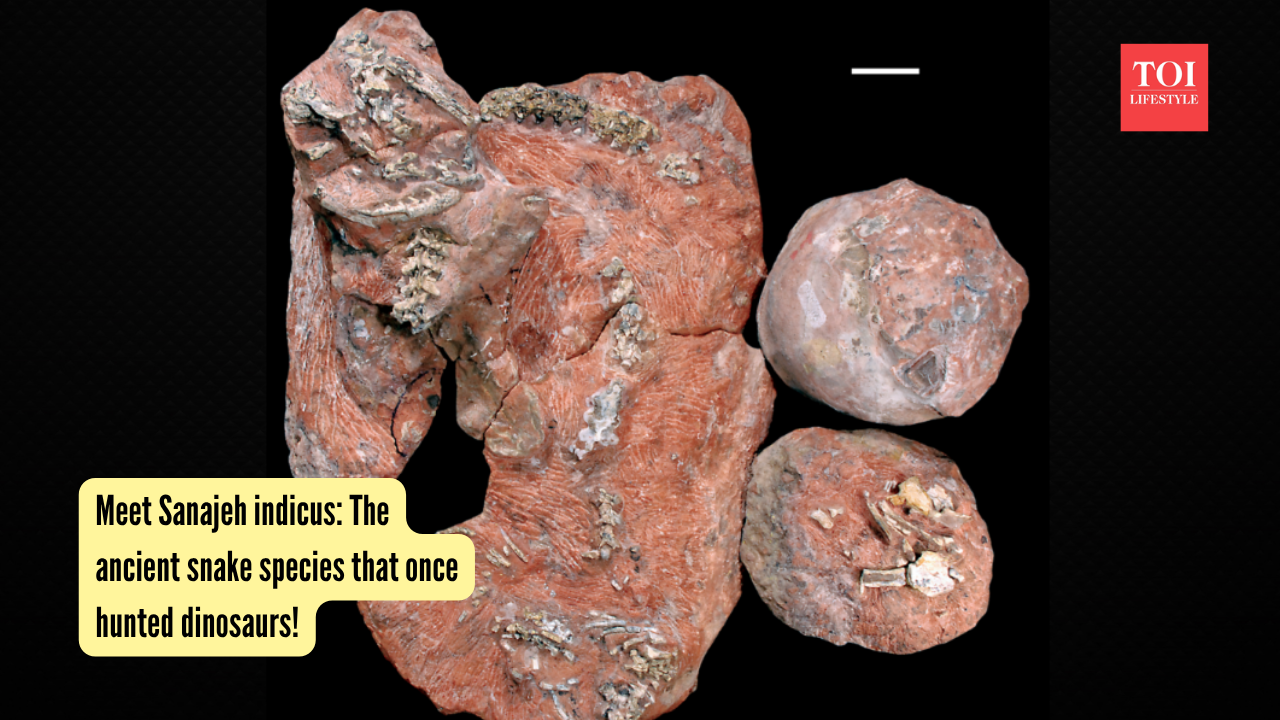
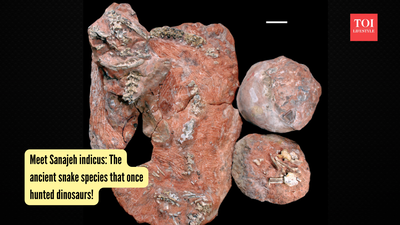
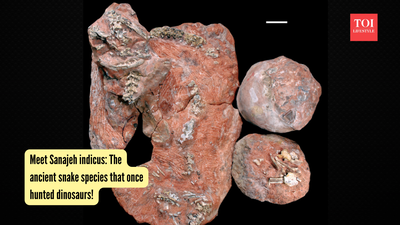
Photo: Study- Predation upon Hatchling Dinosaurs by a New Snake from the Late Cretaceous of India, published in PLOS
Meet Sanajeh indicus: The snake that hunted dino little ones!
Unlike modern giant snakes that swallow large prey whole, this ancient reptile appears to have used ambush and opportunity. Its fossilised remains were discovered near dinosaur eggs and hatchlings, giving rare evidence about its feeding behaviour frozen in time. Such discoveries are extremely unusual because snake skeletons are fragile and rarely preserved intact in the fossil record.Named Sanajeh indicus, it was a prehistoric snake species that lived around 67 million years ago during the Late Cretaceous period in the present-day western India.
The fossils were restudied
The species became well known across the world only when scientists discovered its fossil coiled around sauropod dinosaur eggs and a hatchling. The fossil suggests that ancient snakes preyed on newly hatched dinosaurs and possibly raided nests for food.The fossil was discovered in 1984 by Indian paleontologist Dhananjay Mohabey in Gujarat’s Lameta Formation. However, according to a study, the fossil’s speciality actually came to scientists’ attention years later when paleontologist Jeffrey Wilson re-examined the specimen along with Mohabey.
Their research revealed surprising results
Their research revealed the articulated remains of a snake that was coiled near sauropod eggs and a hatchling, and this made it one of the rarest ‘behavioural’ fossil discoveries involving snakes.According to the researchers, the name Sanajeh means “ancient gape,” referring to the snake’s feeding anatomy. Unlike modern egg-eating snakes that can stretch their jaws widely to swallow eggs whole, Sanajeh indicus likely had a more limited jaw structure. The study noted that the snake “was incapable of ingesting large prey whole,” meaning it may have attacked hatchlings instead of swallowing eggs intact.
So, why exactly was the snake coiled there?
Scientists believe the snake probably waited near nesting grounds for vulnerable baby dinosaurs to hatch. Sauropods laid large communal nests containing many eggs, making it an ideal feeding opportunity for predators.According to research, the fossil association “provides direct evidence of snake predation on sauropod hatchlings.”