


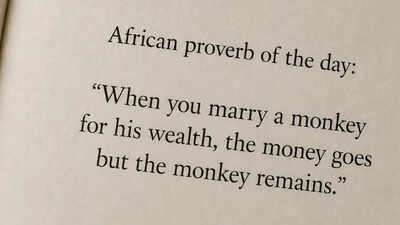
African proverb of the day (AI-generated image)
Some proverbs sound funny at first and serious a few seconds later. This African proverb does exactly that.The image inside the line is almost impossible to ignore. It sounds playful, even harsh. Yet underneath the humour sits a surprisingly sharp observation about relationships, materialism, and human choices.That is probably why the proverb still feels relevant today.People may no longer arrange marriages for survival in the same way many societies once did, but money still influences relationships constantly. Status, appearance, career success, lifestyle, family reputation, and financial comfort often shape romantic decisions more than people openly admit.This proverb quietly warns about what happens when somebody builds emotional commitment on temporary things instead of a genuine connection.Because eventually, temporary things change. And then only the person remains.
African proverb of the day
“When you marry a monkey for his wealth, the money goes but the monkey remains.”
Why this proverb still feels painfully modern
Interestingly, the proverb feels almost designed for modern internet culture despite being much older.Social media constantly presents idealised lifestyles now. Luxury holidays, expensive gifts, designer clothing, large houses, glamorous relationships. Wealth has become deeply tied to attractiveness online. Many people are subtly taught to associate success with personal value.Over time, that affects how relationships are viewed, too.Financial stability obviously matters in real life. Most people want security, comfort, and reliability. The proverb is not criticising practical concerns. Instead, it questions what happens when wealth becomes the primary reason somebody stays emotionally attached to another person.Because money changes.Careers collapse. Businesses fail. Economic downturns happen. Inheritance disappears. Fame fades. The qualities that once looked attractive from a distance may suddenly feel far less appealing once financial comfort disappears alongside them.That is where the proverb becomes uncomfortable.
What does the “monkey” actually represent
The word “monkey” sounds intentionally provocative.The proverb is not literally insulting appearance alone. The monkey represents qualities somebody may secretly dislike, ignore, or tolerate only because wealth makes the relationship seem worthwhile initially.That could mean personality.Cruel behaviour. Arrogance. Emotional distance. Dishonesty. Or simply incompatibility.The proverb suggests that when people overlook deeper problems for material benefit, those ignored issues eventually become impossible to escape once the financial advantages disappear.And honestly, many people probably recognise versions of this dynamic in real life.Not only in marriage, either.Friendships, business partnerships, and social relationships often survive temporarily because of status or financial benefit rather than genuine emotional respect.
The proverb quietly exposes human hypocrisy
One reason this saying remains memorable is that it says something people usually avoid admitting openly.Material attraction exists.Society often pretends love operates completely separately from money, status, or comfort. Real life is more complicated. Financial security influences decisions constantly. People notice wealth. Families notice it too. Communities often reward it socially.This proverb does not deny that reality. Instead, it asks whether money alone can sustain an emotional connection long-term.Its answer seems fairly blunt: no.Eventually, personality becomes impossible to ignore. Habits become visible. Character matters more. Emotional compatibility matters more. If those things were weak from the beginning, financial attraction may not protect the relationship forever.That truth feels uncomfortable because it sounds honest.
Why many old proverbs still survive online today
Ancient proverbs continue spreading across the internet partly because they simplify complicated emotional truths into memorable images.A “monkey” staying behind after the money disappears creates a visual that people instantly understand. The humour softens the harshness slightly, but the message remains serious underneath.And honestly, modern audiences often connect strongly with blunt honesty now.People are surrounded by carefully managed public images every day. Relationship advice online can sometimes sound overly polished or unrealistic. Old proverbs feel different because they rarely try to sound delicate. They speak directly.That directness gives them staying power.
The proverb also says something important about temporary attraction
Money changes how people see others sometimes. Wealth can make flaws appear smaller initially. Behaviour that might otherwise feel irritating suddenly becomes tolerable because of luxury, comfort, or social status that compensates emotionally. The proverb suggests that arrangement rarely lasts permanently.Once circumstances change, people begin seeing the relationship more clearly.That dynamic appears repeatedly throughout literature, films, history, and ordinary life. Relationships built mainly around external benefits often struggle when those benefits disappear. Emotional foundations matter eventually because real life always changes with time.The proverb captures that truth in one sharp sentence.
Why the saying sounds humorous and sad at the same time
Part of the proverb’s brilliance comes from its tone. It makes people laugh slightly before the deeper meaning lands.Many African proverbs work like that. Humour becomes a way to discuss uncomfortable truths without sounding overly preachy. The image feels exaggerated enough to remain memorable, yet emotionally accurate enough to stay meaningful.And beneath the humour sits sadness too.The proverb quietly suggests that some people enter relationships while ignoring their genuine feelings entirely. They compromise emotional honesty for comfort, security, or status. Over time, that compromise becomes difficult to hide from themselves.Because eventually, daily life exposes everything.
Why personality matters more with time
Physical attraction changes. Wealth changes. Social status changes, too. Personality tends to become more visible over the years rather than less.That is another reason the proverb feels timeless. Long relationships are built through ordinary daily interaction eventually. Conversations. Habits. Stress. Illness. Financial difficulty. Family problems. Emotional support during difficult periods.Those moments reveal character far more clearly than luxury ever can.Someone may initially admire wealth, but emotional compatibility often determines whether life together remains bearable long-term. The proverb exaggerates that idea intentionally through humour, yet the emotional truth underneath remains surprisingly sharp.
The saying also reflects broader human behaviour
Interestingly, the proverb applies beyond romantic relationships.People sometimes stay connected to powerful individuals because of influence or financial advantage, despite privately disliking them. Friendships occasionally survive based on status rather than genuine affection. Professional relationships can become transactional instead of emotionally honest.Then circumstances change.Money disappears. Influence fades. Power weakens.And suddenly the underlying relationship becomes impossible to ignore. That broader meaning probably explains why the proverb continues surviving across generations.
Why this proverb still feels relevant in modern relationships
The world changes constantly, yet human behaviour often stays surprisingly similar underneath.People still chase status. Wealth still influences attraction. Social pressure still shapes relationships. And many individuals still discover eventually that emotional compatibility matters far more than temporary appearances first suggested.That is why this proverb continues to feel fresh even now.It does not say money is evil or unimportant. Realistically, financial stability matters enormously in life. The proverb simply warns against building emotional commitment entirely around material advantage while ignoring deeper personal realities.Because money can disappear unexpectedly. And when it does, character remains.That final idea probably explains why the proverb lingers in people’s minds after reading it. The line sounds humorous on the surface, but underneath the joke sits an old and uncomfortable truth about human nature that societies keep rediscovering generation after generation.